
The Problem and the Paradigm Shift
When it rains in New York, the city floods not just with water, but with missed opportunities. Each storm sends billions of gallons rushing through the city’s combined sewer system, overwhelming its capacity and forcing untreated sewage into surrounding rivers and neighbourhoods.
The issue is more than infrastructure strain; it’s a growing flood crisis compounded by climate change and outdated design. At the same time, the city generates an abundance of wastewater that is primarily seen as waste rather than a potential asset. But what if we flipped the script? What if flooding and wastewater weren’t just problems to manage but resources to power a new kind of urban resilience? Untreated sewage water.

Untreated sewage water
Bacteria as Engineers
The Promise of Microbial Fuel Cells. Microbial Fuel Cells, or MFCs, are a nature-based technology that uses bacteria in wastewater to generate electricity. Microbial Fuel Cell Chambers.
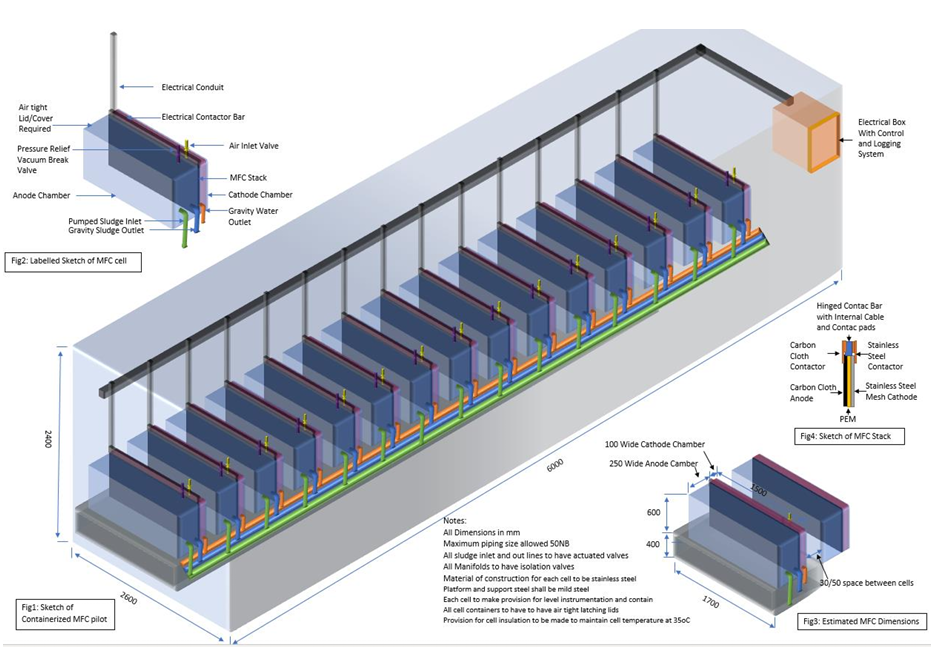
Microbial Fuel Cell Chambers
As these microbes digest organic matter, they release electrons, a natural biological process that can be harnessed to produce clean energy. Even better, MFCs not only generate electricity but also purify the water. Imagine a living, breathing battery hidden inside the city’s sewer system.
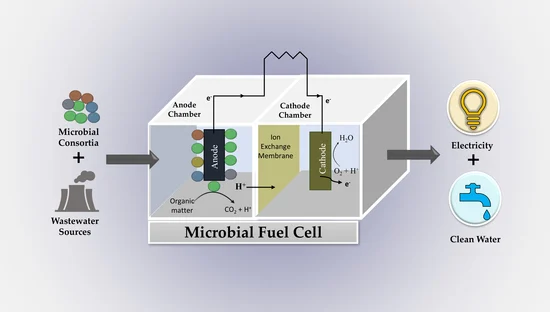
Process of harnessing MFC
Our team proposes installing MFC systems midstream, intercepting the flow before it reaches treatment plants. These embedded systems could power real-time water quality sensors that monitor Chemical Oxygen Demand, nitrate levels, and other critical indicators. All of this would be self-powered by the bacteria already in the waste.
A Framework for Solutions
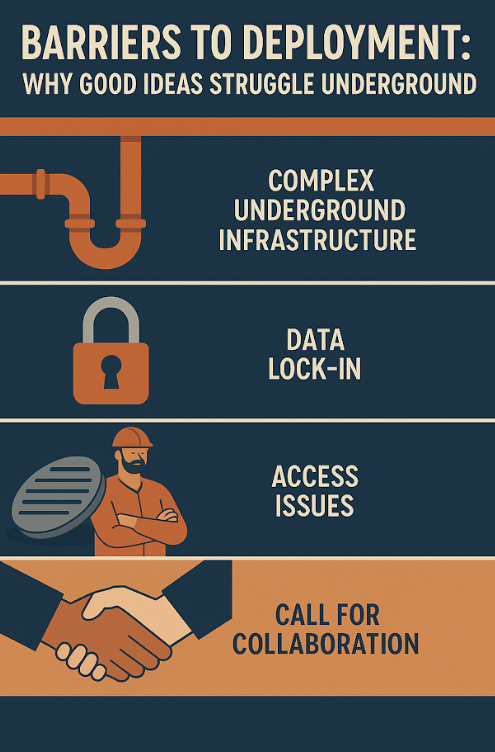
The process of harnessing MFC Barriers to Deployment: Why Good Ideas Struggle Underground. This graphic highlights four key reasons why it’s hard to bring Microbial Fuel Cells into New York City’s sewer system. Even the smartest solutions face real-world challenges.
| Barrier | Our Approach & Solution |
|---|---|
| 1. Crowded & Complex Infrastructure: The sewer system is old, congested, and difficult to modify. | We are designing non-invasive, modular MFC units that can be deployed within existing pipes and chambers without major construction, similar to how condition-assessment robots are used. |
| 2. Lack of Data & Mapping: Limited access to accurate flow data and system maps makes planning difficult. | Our initial pilot projects will serve as data-generating platforms. The sensors powered by our MFCs will create a rich, real-time dataset of system performance, helping to fill critical information gaps. |
| 3. Limited & Unsafe Access: Many parts of the system are hazardous and difficult to reach for installation and maintenance. | We are developing robust, long-life MFC cartridges designed for minimal maintenance. Deployment and retrieval would be coordinated with city crews during scheduled maintenance windows, ensuring safety and efficiency. |
| 4. Siloed Stakeholders: Success requires collaboration across city departments, engineers, and communities. | We are proactively building a cross-functional consortium including DEP, DOT, planning authorities, and community boards. We frame this not just as a tech install, but as a partnership for urban resilience. |
First, the underground network is old, crowded, and difficult to work with. Second, access to maps and flow data is limited, making planning difficult. Third, many parts of the system are hard to reach safely. And finally, new solutions like this need teamwork from city departments, engineers, and local communities. To make real change, we have to work together from the ground up.
In a city built on ambition, it’s time to reimagine what lies beneath. What if the same wastewater that floods our streets could power our sensors, nourish our gardens, and warn us before the next crisis strikes? Microbial Fuel Cells remind us that resilience doesn’t always come from concrete and steel; it can come from biology, circular thinking, and the will to innovate. The pipes may be hidden, but the opportunity is right in front of us. Let’s not just manage the overflow. Let’s turn it into power.
Business Model Canvas
Our model is based on creating layered value for the city and its residents, moving from a service-based pilot to a product-based ecosystem.
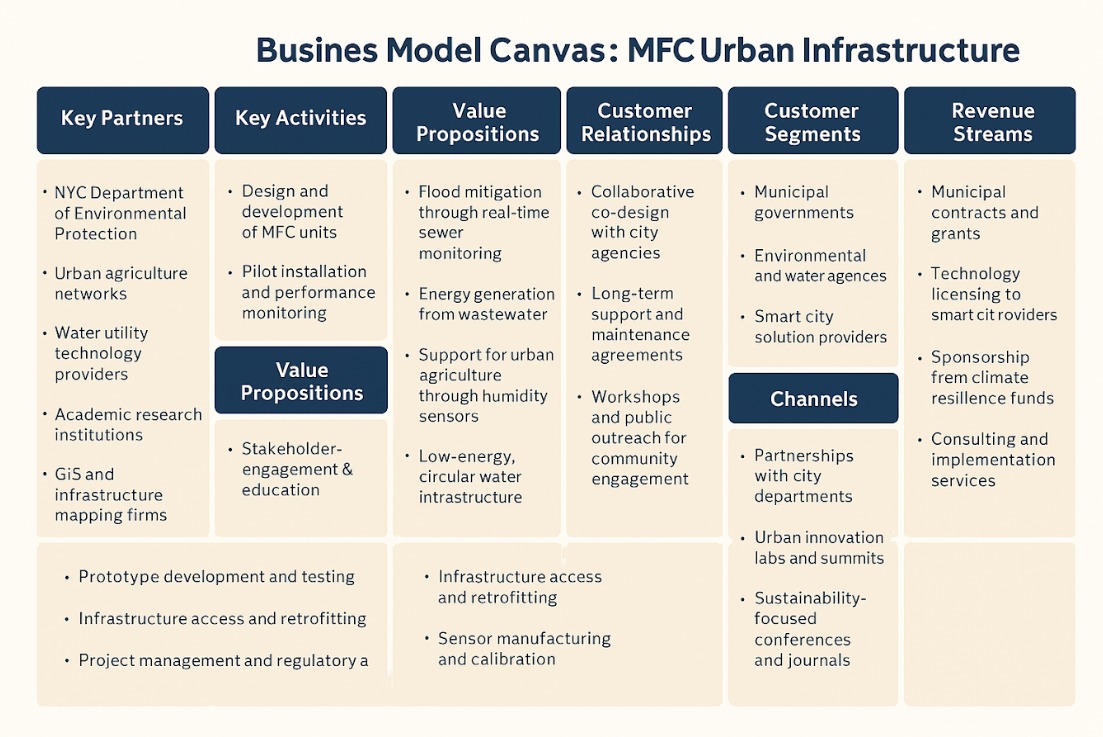
- Key Partners: NYC DEP, University research labs, community environmental groups, impact investors.
- Key Activities: MFC unit design and manufacturing, data platform management, partnership development, and community engagement.
- Value Propositions:
- For the City: Reduced CapEx on sensor power infrastructure and wiring. Valuable, real-time water quality data for managing the sewer system and CSO events. A tangible step towards climate resilience and circular economy goals.
- For Communities: Reduced local flooding risk through better system monitoring. Increased transparency about waterway health. Potential for local job creation in unit monitoring and maintenance.
- Revenue Streams:
- Pilot Phase: Service contracts for data-as-a-service (DaaS) and monitoring reports.
- Scale Phase: Sale of MFC sensor units and replacement cartridges to the city and other municipalities.
Multidisciplinary Problem-Solvers
MFC Urban Infrastructure. Who we are as a team. We are a multidisciplinary team of researchers, designers, and urban problem-solvers passionate about circular water innovation and climate-resilient infrastructure. This project was born at the intersection of science, sustainability, and social equity—the NGDA Team from South Africa. Our backgrounds span chemical engineering, digital technology, urban design, and development studies, giving us a unique lens to rethink how cities manage water, waste, and energy.
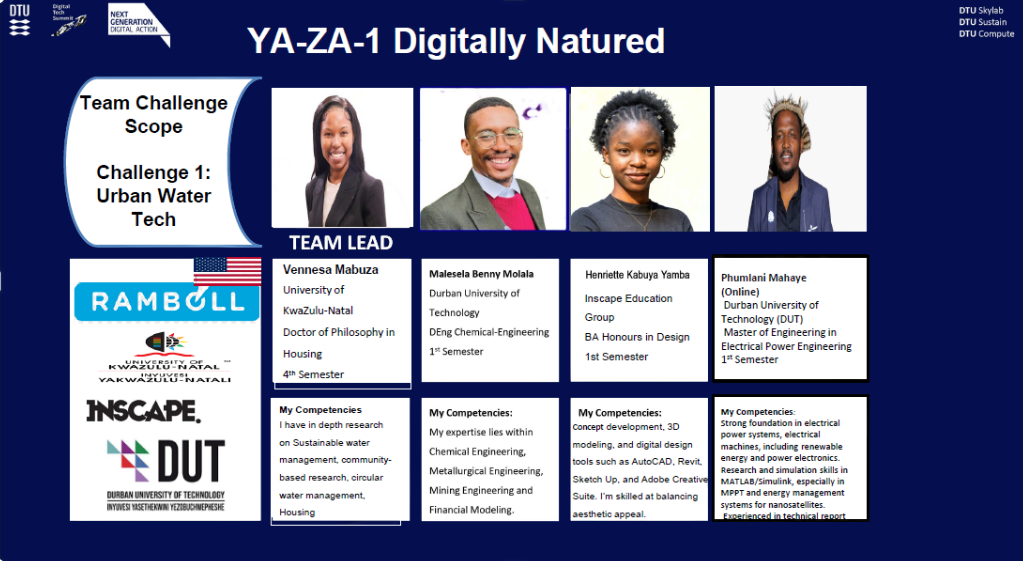
NGDA Team from South Africa
What unites us is a shared belief: that even the most overlooked systems, like wastewater, can become engines of transformation when reimagined through the right lens. We’re not just developing prototypes, we’re building partnerships. From local communities to global cities, our goal is to co-create smarter, greener, and more inclusive infrastructure from the underground up.
From City Sewers to Your Backyard
Did You Know? Your rainwater tank could power your home garden sensors. Microbial Fuel Cells (MFCs) aren’t just for city sewers—they can work right in your backyard. When paired with a Smart Rainwater Harvesting system, MFCs can convert the organic matter naturally present in stored rainwater into small amounts of electricity.
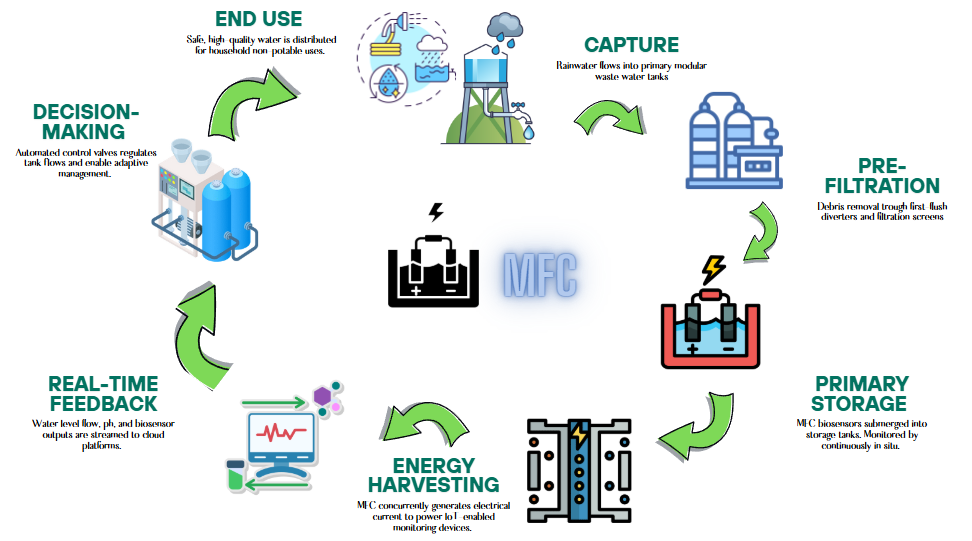
MFC Smart Rainwater Harvesting System
This energy is sufficient to power humidity sensors, pH monitors, or smart irrigation systems, enabling you to manage your garden or rooftop farm more efficiently. MFC Smart Rainwater Harvesting System. Instead of relying on batteries or grid power, you’re turning captured rain and everyday microbes into a self-sustaining, circular system—where water reuse, energy recovery, and food production work together. Small scale. Big impact. That’s circular living, made simple. Please address these issues
Of course. This is a compelling proposal that blends cutting-edge science with practical urban challenges. The provided text is strong on vision and concept, but would benefit from more structured clarity and specific, actionable details to address the barriers it identifies.