
Colombia 3 – Fluxcolombia.cloud
The Problem
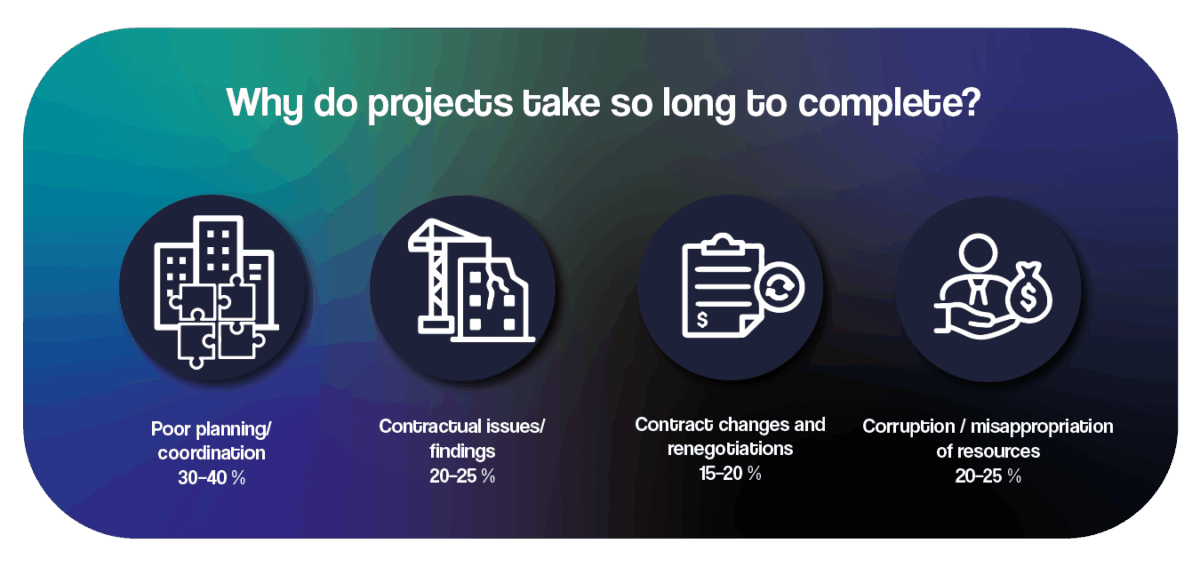
In Colombia, and particularly in Bogotá, public infrastructure projects face multiple obstacles that make it difficult for them to be completed within the planned timelines. Among the main factors causing delays are corruption, findings from oversight bodies, constant changes in contracts, and, in many cases, poor planning. These delays not only increase project costs and affect citizens’ quality of life, but they also feed a perception of inefficiency and distrust toward local administrations.
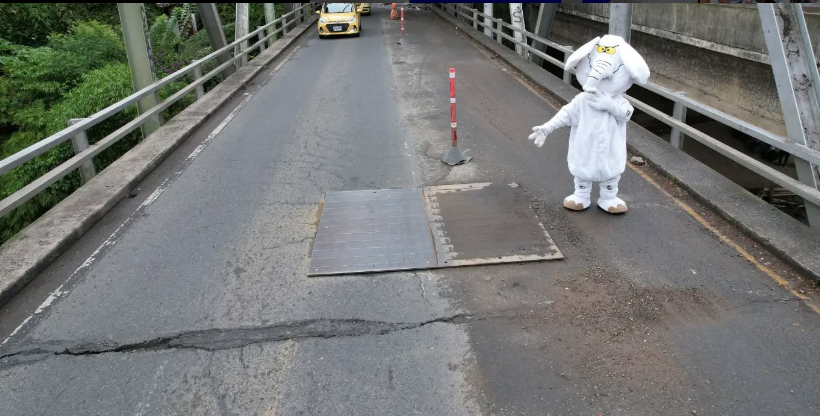
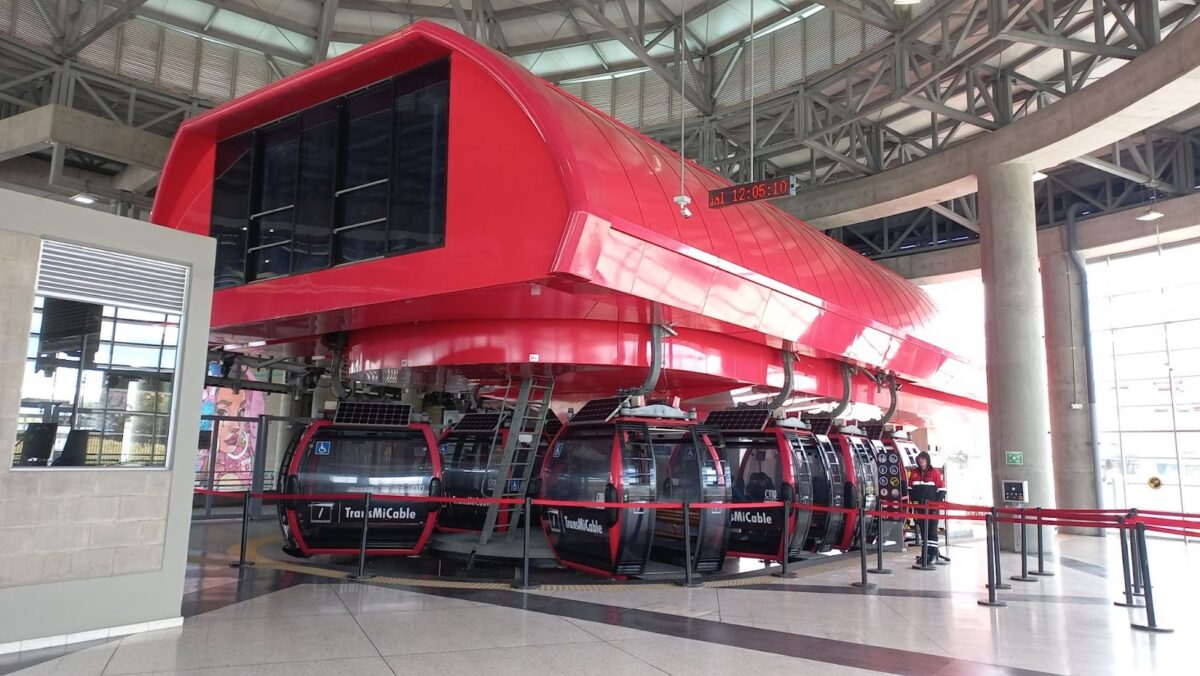
Examples such as the construction of the Bogotá Metro, delays in public hospitals, the expansion of Avenida 68, or even mobility projects like TransMiCable, show how infrastructure that should improve citizens’ lives often ends up becoming a source of frustration. In the public imagination, these unfinished or delayed works are known as “white elephants”, visible symbols of failed management that seem to repeat year after year.
As a result, citizens tend to associate any delay with a possible case of corruption, even without having clear information about it. This constant dissatisfaction erodes trust in public institutions and weakens the relationship between society and the State.
Although there are open data platforms and oversight mechanisms designed to provide information about these processes, most of these systems use complex technical language that is not user-friendly. This makes it difficult for citizens, journalists, or researchers to understand the projects in a simple way, ultimately limiting transparency and reducing citizen participation in monitoring public works.
How is the problem experienced in daily life, and how does the team approach it from their context?
We are from Bogotá, and we see cases of “white elephants” all the time. They are called this because, just like an elephant is impossible to maintain, these are projects that consume enormous amounts of public money but end up being useless: they are left half-built, abandoned, or delivered with flaws that prevent their real use.
In daily life, these white elephants are felt in streets that remain closed for years due to unfinished works, in hospitals that never open their doors, in schools that exist only on blueprints while children continue studying in improvised classrooms. For those of us living in the city, they are not just statistics about delays: they are endless waits, disconnected neighborhoods, and broken promises that become part of the routine.
This repetition generates a deep sense of powerlessness and distrust. People end up believing that “everyone is stealing” or that nothing will ever change, and with that, public trust erodes. From our experience as young people in Bogotá, we decided not to remain in complaint alone: we aim to transform that frustration into a tool that restores clarity, trust, and participation. That is how our proposal was born: to make official information no longer inaccessible, but instead a resource available to every citizen.
How has Bogotá/Colombia approached the problem?
In recent years, Bogotá and Colombia have launched different initiatives to address transparency issues in infrastructure. Among them is SECOP II, the Electronic System for Public Procurement, where contracts, terms of reference, and budgets are published with the goal of giving any citizen access to official public procurement information. At the international level, the city adopted in 2021 the CoST (Infrastructure Transparency Initiative), which requires public entities to disclose clear and comparable information on works, ensuring oversight from multiple actors: government, civil society, and the private sector.
There are also more targeted tools, such as HABITAPP, which allows citizens to report and track urban problems related to housing, public space, and minor works, fostering direct dialogue with City Hall. Nationally, the Secretariat for Transparency manages PACO (Plataforma Anticorrupción Colombia), which centralizes data, reports, and corruption risk analyses to promote social control and identify irregularity patterns. At the district level, the Mayor’s Office has developed Gestión Abierta de Bogotá (GAB), which publishes management data, open datasets, and citizen participation channels to strengthen accountability.
Alongside these official initiatives, social and citizen-led efforts have also emerged to highlight the issue. The digital character “El Elefante Blanco” denounces unfinished projects on social media, becoming a public reference. Platforms like Colombialicita analyze public contracts to identify possible irregularities in tenders, while Bogotá Te Escucha provides a direct participation channel where citizens can submit complaints, proposals, or reports related to public management.
Despite the existence of multiple platforms and databases on procurement and transparency, the central problem is that this information does not truly become a useful tool for citizens. Some data is available, yes, but it is often presented in a dense, technical, and fragmented way, making it difficult to access for those who want to monitor it in practice. Official platforms do not offer a clear or user-friendly reading, and in reality, they function as isolated repositories that do not interact with each other. Moreover, there is still no transactional traceability system that integrates finances, contracts, and project execution in one single view—something that would allow citizens to understand, from beginning to end, what happens with public resources. This is precisely where the need arises for a tool that translates and connects all this dispersed information.
Our Solution: What is Flux?
Flux is a citizen transparency platform that combines government data with community participation to provide a clear, accessible, and understandable view of public infrastructure projects in Bogotá. Its mission is to “keep an eye on the works,” showing in simple terms how public resources are being used and enabling citizens to exercise real social oversight. To achieve this, Flux tracks documents and data available in the Electronic System for Public Procurement (SECOP) and in Colombia’s open data portals, translating them into useful, digestible, and actionable information for anyone interested in citizen monitoring.
More than just a technological tool, Flux is understood as a civic ally. It does not seek to punish or replace oversight bodies but rather to empower communities so that they themselves can actively monitor and participate in public management. The philosophy behind Flux is that transparency is not imposed from the top down; it is built from the bottom up, when citizens can access information, understand it, and turn it into collective action.
In this way, Flux transforms cold data into living narratives that anyone can interpret. Its strength lies not only in the technology it uses but also in its ability to generate trust, ownership, and social participation. It is a platform that translates complexity into clarity, and distrust into citizen engagement.
What does Flux bring?
Flux brings an integrated system of transparency that combines traceability, clear communication, citizen participation, and technological innovation. First, it allows tracking of official documents and data available in SECOP II and Colombia’s open data portals, reorganizing them so that any citizen can understand them without the need for technical knowledge. This information is not left as isolated data: Flux transforms it into clear alerts and reports that act as warning signals whenever a project shows updates or inconsistencies, through the so-called “nodes”, the different official and citizen “eyes” monitoring the process.
In addition, the platform fosters citizen connection and ownership, bringing communities closer to infrastructure projects through active participation spaces where they can report irregularities, file complaints, or simply follow up on progress. In this way, trust is built and a stronger sense of belonging to public works is developed.
Flux also consolidates contracts, progress reports, and financial data in a single place, reducing current fragmentation and generating a reliable information base that makes social oversight easier. Finally, it introduces a component of technological innovation by using blockchain, ensuring security, traceability, and the immutability of information.
By doing so, Flux aligns with global development goals such as SDG 16 (Peace, Justice, and Strong Institutions), SDG 11 (Sustainable Cities and Communities), and SDG 9 (Industry, Innovation, and Infrastructure). This demonstrates that its scope goes beyond the local, positioning itself within an international effort to restore citizens’ trust in public institutions and to build more transparent governance.
The Systems (CCC, BIM, Citizen Participation Mechanisms, Blockchain)
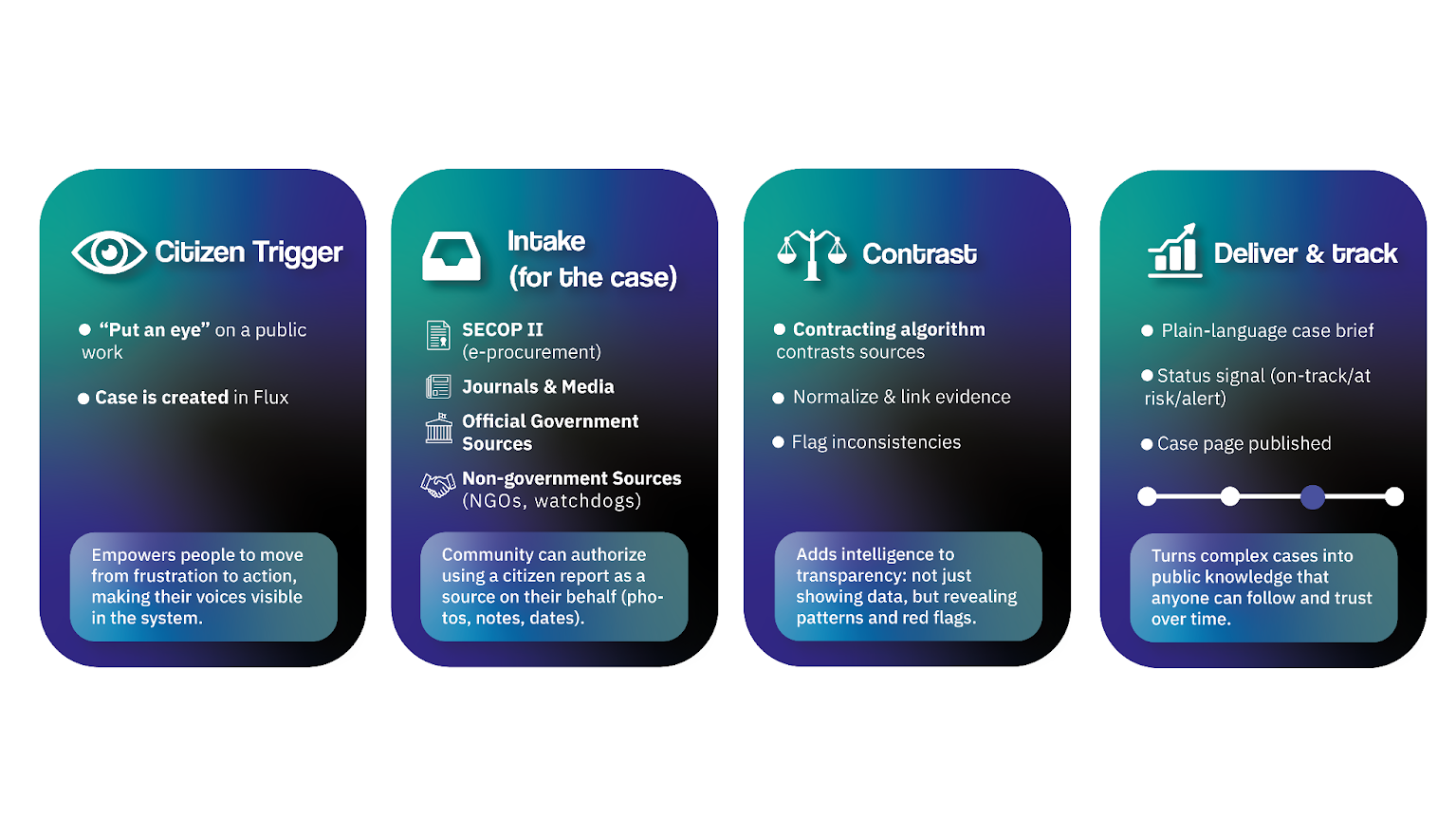
Flux’s operation is structured around a central system called C.C.C: Contrast, Compile, and Communicate. First, the platform contrasts the information available in SECOP II with other official and citizen sources, such as PACO, GAB, Comptroller’s Office reports, or even community complaints. This validates the consistency of the data and helps detect potential anomalies. Then, it compiles that information into a unified repository that organizes contracts, budgets, timelines, and project progress, generating indicators to measure the real state of each work. Finally, it communicates the findings through clear reports and citizen alerts, designed so that anyone, regardless of technical knowledge, can understand what is happening with a specific project.
This process is reinforced by citizen participation mechanisms, which turn Flux into an active tool for social oversight. Citizens can submit reports, photos, or concerns, and when several reports coincide, the platform generates collective alerts that highlight areas of concern. In this way, community leaders and watchdog groups have a practical instrument to monitor the projects in their neighborhoods.
Blockchain technology strengthens this operation by ensuring that every transaction or contract modification is recorded in an immutable way, offering complete traceability of financial flows, budget additions, or contractual changes. In a later phase, Flux will also integrate Building Information Modeling (BIM), enabling visual comparisons between what was planned and what is actually being built, projecting costs and timelines, and even showing real-time progress of works through digital models.
Together, these systems allow Flux to transform dispersed and technical information into clear, verifiable, and actionable data, closing the gap between institutions and citizens, and enabling true oversight of how public resources are used.
Growth Phases
Phase 1 (Pilot): Basic integration with SECOP II and open data portals, with a citizen-focused interface.
Phase 2 (Expansion): Incorporation of citizen participation mechanisms, blockchain for contract traceability, and collective alerts.
Phase 3 (Scaling): Integration of BIM and predictive models to visualize project progress in real time, comparing planned vs. executed work.
Phase 4 (Institutionalization): Official adoption by city governments, oversight bodies, and international cooperation as a transparency tool.
Two Complementary Views
Flux envisions two levels of interface:
Citizen View: clear, visual, and accessible, with maps, simple indicators, and easy-to-understand reports.
Institutional View: designed for governments, oversight bodies, and international organizations, with advanced dashboards, downloadable data, and comparative analyses for detailed monitoring.
The Interface
The Flux interface is designed to be intuitive and accessible, so that any citizen can engage with the information without needing technical knowledge. Upon entering, the user finds an overview of the city’s projects, with maps and summaries that immediately show which projects are progressing as planned, which are delayed, and which are generating alerts.
Beyond the general view, the platform allows users to explore each project in detail. Contracts, budgets, timelines, and progress reports are reorganized into clear and visual project cards, accompanied by graphics that illustrate their evolution over time and highlight the most significant changes. Whenever an anomaly is detected, it is translated into a simple alert that can be consulted by anyone.
Flux also opens a space for direct interaction, where citizens can report irregularities, upload photos, or share questions about the works in their surroundings. These inputs are integrated with official information, and when several reports coincide, they become collective signals that help prioritize oversight.
Finally, the platform incorporates a pedagogical component, explaining in simple terms how information traces are built, what traceability through blockchain means, and how open data can become practical tools for citizen oversight. In this sense, Flux not only communicates information but also teaches citizens how to interpret and use it.
The Business Model
For Flux to work, it is necessary to combine open access to information with strategies that ensure sustainability and scalability. The platform is based on a freemium model, where any citizen can consult projects, budgets, and basic alerts at no cost. This encourages mass adoption and builds trust in Flux as a public good.
To this scheme is added a premium subscription version, aimed at journalists, researchers, universities, and NGOs. This version offers advanced tools such as customized dashboards, processed data downloads, comparative analyses, and deeper visualizations, making it easier for those who require a higher level of detail.
In parallel, Flux includes an institutional licensing model for city governments, public entities, and international organizations such as the World Bank, the IDB, or the Embassy of Denmark. In this way, the platform can become an official monitoring and transparency instrument within cooperation frameworks or local government programs.
The model is complemented by strategic alliances that bring together different stakeholders. Through citizen awareness campaigns, risk reports shared with the media, and training workshops in universities and social organizations, Flux expands its impact and strengthens its legitimacy.
The value proposition is clear: for citizens, it represents free and simple access to information that was previously technical and incomprehensible; for experts, a premium tool that saves time in analysis; and for governments and international cooperation, a platform that demonstrates impact, strengthens public trust, and contributes to fighting corruption.
How is it sold? Who is it for?
Flux is designed to reach different audiences through tailored strategies. For the general public, the platform is offered as a free and open service, with a clear and visual interface that allows citizens to consult projects, budgets, and alerts without requiring technical knowledge. In this way, mass adoption is ensured, and trust in the tool as a public good is built.
For experts —journalists, researchers, NGOs, and universities— Flux offers a paid version with greater depth. This includes customized dashboards, processed data downloads, and comparative analyses that make it easier for those who need a more rigorous reading of the information.
In the case of local governments and international cooperation agencies, Flux is presented as an institutional licensing tool. Through agreements with city halls or international entities such as the World Bank, the IDB, or the Embassy of Denmark, the platform can be integrated into official monitoring frameworks, becoming a strategic ally in the fight against corruption.
The private sector is also a key audience. Through strategic partnerships with companies interested in corporate social responsibility, Flux can promote citizen awareness campaigns, risk reports, and training workshops. In this way, the platform is not only sold as software but as an ecosystem of trust and participation that engages multiple actors.
To better understand its scope, Flux can be framed within a PESTEL analysis:
Political: supports open government goals in Bogotá and Colombia.
Economic: enables savings by detecting anomalies early and reducing cost overruns.
Social: fosters citizen ownership and trust in public institutions.
Technological: integrates blockchain, APIs, and BIM in progressive phases.
Environmental: promotes efficiency in materials and prevents waste from unfinished works.
Legal: complies with privacy regulations and guarantees the right of reply in reports.
Scope – BIM
As part of Flux’s future scope, the integration of Building Information Modeling (BIM) is envisioned as a key tool to enhance infrastructure project monitoring. BIM allows for the digital modeling of a project, integrating in a single system information on timelines, costs, and resources. This makes it possible to generate more accurate estimates of prices, progress, quantities of materials and labor, as well as Gantt charts that illustrate the project’s actual schedule.
The value of BIM goes beyond planning, as it also enables the detection of collisions or inconsistencies in the construction process, signaling in advance where problems may arise. In this sense, it becomes a technical reference for how a project should perform in terms of budget and timelines, establishing a standard against which to compare actual execution.
Integrating BIM into Flux would open the possibility for more robust contrasts. On the one hand, internal contrasts within the same official source, such as SECOP II against SECOP II. On the other hand, external contrasts, where SECOP data could be compared with BIM models and with other non-official sources, such as press articles, citizen reports, or discussions in community boards.
Expansion to Colombia and Latin America
Flux is conceived not only as a tool for Bogotá but also as a scalable model that could be replicated across Colombia and later in other Latin American countries facing similar transparency challenges.
Roadmap for Expansion (2025–2030):
2025–2026: Pilot implementation in Bogotá, refining the platform with citizen participation, SECOP II integration, and initial blockchain functionality.
2027: Expansion to other major Colombian cities (e.g., Medellín, Cali, Barranquilla), adapting the platform to regional procurement systems and local community needs.
2028: Consolidation at the national level, with integration into Colombia’s open data infrastructure and partnerships with oversight bodies.
2029: Regional expansion to Latin America, starting with countries that already have open data and transparency frameworks (e.g., Mexico, Chile, Peru).
2030: Positioning Flux as a Latin American reference platform for infrastructure transparency, supported by cooperation with international organizations such as the IDB, World Bank, and OECD.
Through this roadmap, Flux can evolve from a local pilot into a regional transparency ecosystem, contributing to stronger institutions, citizen empowerment, and more efficient use of public resources across Latin America.
Flux Bogotá: Restoring Trust in Public Works
White Elephants: When Public Works Become Broken Promises
In Colombia (and many countries), unfinished public works – often called “white elephants” – have become symbols of wasted resources and broken trust. In Bogotá, you can find streets dug up for years, hospitals that never open, and schools that exist only on paper while children study in makeshift classrooms. Each stalled or abandoned project isn’t just a failure of concrete and steel – it’s a broken promise that erodes citizens’ trust in government. Over 1,800 such incomplete or defective projects have been identified nationwide, at a value of around COP 25 trillion (≈USD 6–7 billion). These fiascos, marked by huge cost overruns and years-long delays, make corruption and mismanagement painfully tangible. People see the barricades and abandoned sites and feel powerless; many start believing “everyone steals” and that nothing will ever change. This crisis of confidence is a direct threat to democracy – when public works fail, citizens lose faith in public institutions.
Bogotá offers vivid examples. The long-delayed metro system, new hospitals that missed their opening dates, and the stalled expansion of major roads like Avenida 68 have all become infamous white elephants. These projects were meant to improve daily life, but their failure has instead fostered frustration and cynicism. The social damage is clear: every unfinished project undermines the social contract, suggesting that public promises can be broken without consequence.
As Bogotá’s District Comptroller put it:
“The best way to build trust in citizens is to look after their interests, assert their taxes and deliver the works done. The works belong to the people, not a government.”
In other words, citizens deserve better – and they are demanding change.
Enter Flux: A Civic-Tech Response to Rebuild Trust
Flux was born from this very frustration – it is Bogotá’s answer to the white elephant problem, a civictech initiative designed to restore transparency and trust in public infrastructure. Think of Flux as a GPS for public money guiding everyone through budgets, timelines, and construction updates. At its core, Flux is a digital platform that centralizes, validates, and communicates information about public works. It brings fragmented government data, project reports, audits and community feedback into one clear, accessible interface. In short, Flux makes the invisible visible and turns hidden updates into an open window on how public money is spent (or misspent).
Official records
Flux bridges official records with citizen input. It pulls contracts, budgets, schedules and status updates from systems like SECOP II, Bogotá’s open data platforms and audit reports.
Citizen contributions
It welcomes citizen reports, photos of stalled works, and on-the-ground observations. Combining sources creates a complete picture.
Features for different actors
Flux translates raw data into maps, timelines, budget trackers, progress bars and alerts in plain language so transparency is inclusive.
Citizens
Residents become watchdogs: if you see a stalled project, submit a report or upload a photo.
Validate & Contrast
Flux validates and integrates reports with official data so community voices trigger real alerts. If records say “on track” but evidence says otherwise, it flags discrepancies.
Flags & Outcome
These flags (eye icons on the map) point to “something’s not right” and focus oversight to prevent new white elephants.
How Flux Works – Contrast, Compile, Communicate
Flux’s operation revolves around C–C–C: Contrast, Compile, Communicate to turn fragmented data into actionable knowledge.
Contrast
Cross-checks official records (e.g., SECOP II, city dashboards) against community reports, oversight findings, and media to catch anomalies in near real time.
Compile
Builds a 360° view per project with budgets, milestones, contractor details, modifications and analytics like SPI and CPI.
Communicate
Delivers clear visuals and alerts (e.g., “Delayed – 6 months behind”) and exports for councils, committees, or media.
After the C–C–C cycle, you get visible accountability. If something goes wrong, Flux signals it; if it goes well, it builds confidence that public money delivers results.
Flux Meets NGDA’s Challenge: Transparency from End to End
Built within Next Generation Digital Action, Flux meets end-to-end traceability, immutable record-keeping, integration with public systems, and real-time usability.
End-to-end traceability
Every peso can be followed using blockchain to log transactions and budget changes end to end.
Immutable history
Immutable ledger timestamps entries; originals persist to form a permanent audit trail.
Integration with public finance systems
Integrates SECOP II, GIS viewers (e.g., IDU), and PACO using open standards like OCDS for interoperability.
Real-time usability
Updates as new data arrives; plans to integrate BIM for planned vs. actual and a responsive web UI.
Flux acts as an intelligent intermediary that follows the money and the work so nothing gets lost or doctored.
Impact and Global Goals: From Bogotá to the World
Flux strengthens governance and community engagement, saving public funds and detecting issues early to avoid white elephants. It aligns with the UN SDGs.
SDG 16 – Peace, Justice & Strong Institutions
Builds accountability, fights corruption, and strengthens transparent institutions.
SDG 11 – Sustainable Cities & Communities
Improves transparency in urban infrastructure for more inclusive and sustainable cities.
SDG 9 – Industry, Innovation & Infrastructure
Leverages innovation (e.g., blockchain, AI, open standards) to improve infrastructure delivery and integrity.
Beyond global goals, Flux turns transparency into a civic habit, moving communities from resignation to engagement and creating an ecosystem of trust that can scale to other cities.
From Bogotá to Your City: A Call to Action
Flux Bogotá started local but carries a universal promise: turning transparency into public power. At NGDA in Denmark we invite officials, innovators, partners, and citizens to explore Flux and imagine its impact.
Municipal agencies
Imagine a real-time dashboard of projects where early warnings replace post-mortems. Flux integrates with finance systems to make oversight second nature.
International organizations & embassies
Flux scales to global anticorruption and civic participation goals. Support via funding, knowledge exchange, or pilots.
Civic tech & watchdog NGOs
We build an ecosystem: bring apps, data sources, and oversight methods (e.g., AI analytics, SMS reporting) and adapt Flux to other sectors.
Ultimately, Flux empowers people through transparency, reinforcing democracy by amplifying oversight. Visit us at the Colombian pavilion to see Flux in action and explore collaboration.